
Ijen Blue Fire: How to See the Rare Blue Flame Volcano
5 June 2021 10.170x Articles Blog
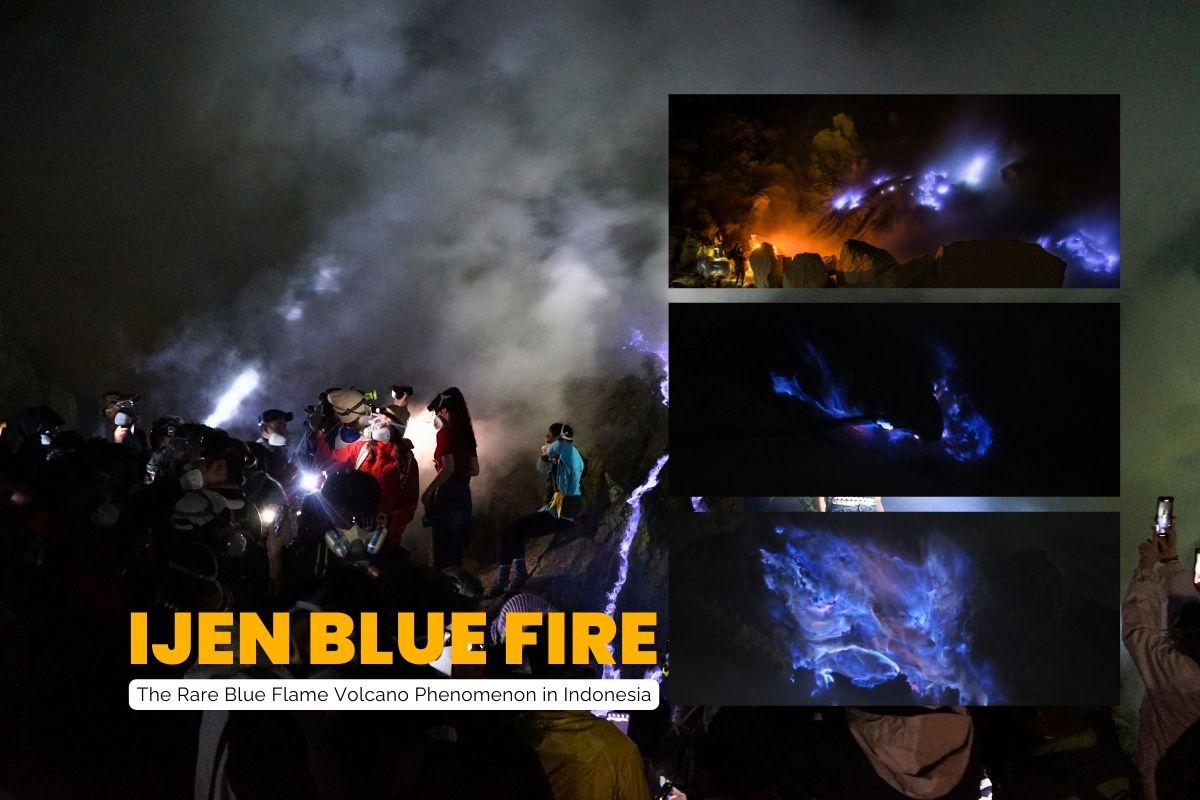
The rare blue flames burning from sulfur gas at Kawah Ijen crater in East Java.
Ijen Blue Fire: The Rare Blue Flame Volcano Phenomenon in Indonesia
The Ijen Blue Fire is one of the rarest volcanic phenomena on Earth. Unlike ordinary lava, this natural spectacle appears as electric-blue flames burning in the darkness of Mount Ijen volcano in East Java, Indonesia. Travelers from around the world visit the volcano at night to witness this extraordinary event.
The blue fire occurs when sulfuric gas emerging from the volcano ignites upon contact with oxygen, creating glowing blue flames that can reach several meters high. These flames are best seen before sunrise, when the darkness allows the phenomenon to shine vividly against the volcanic landscape.
The phenomenon is located inside Kawah Ijen crater, one of the most famous volcanic destinations in Indonesia. The hike to the crater typically begins around midnight so visitors can descend into the crater and observe the flames before daylight arrives.
If you are planning to visit, understanding the hiking duration, route conditions, and best viewing times is essential. For a complete overview of the volcano, routes, and visitor tips, you can explore this comprehensive Ijen Crater guide before starting your journey.
What Is the Ijen Blue Fire
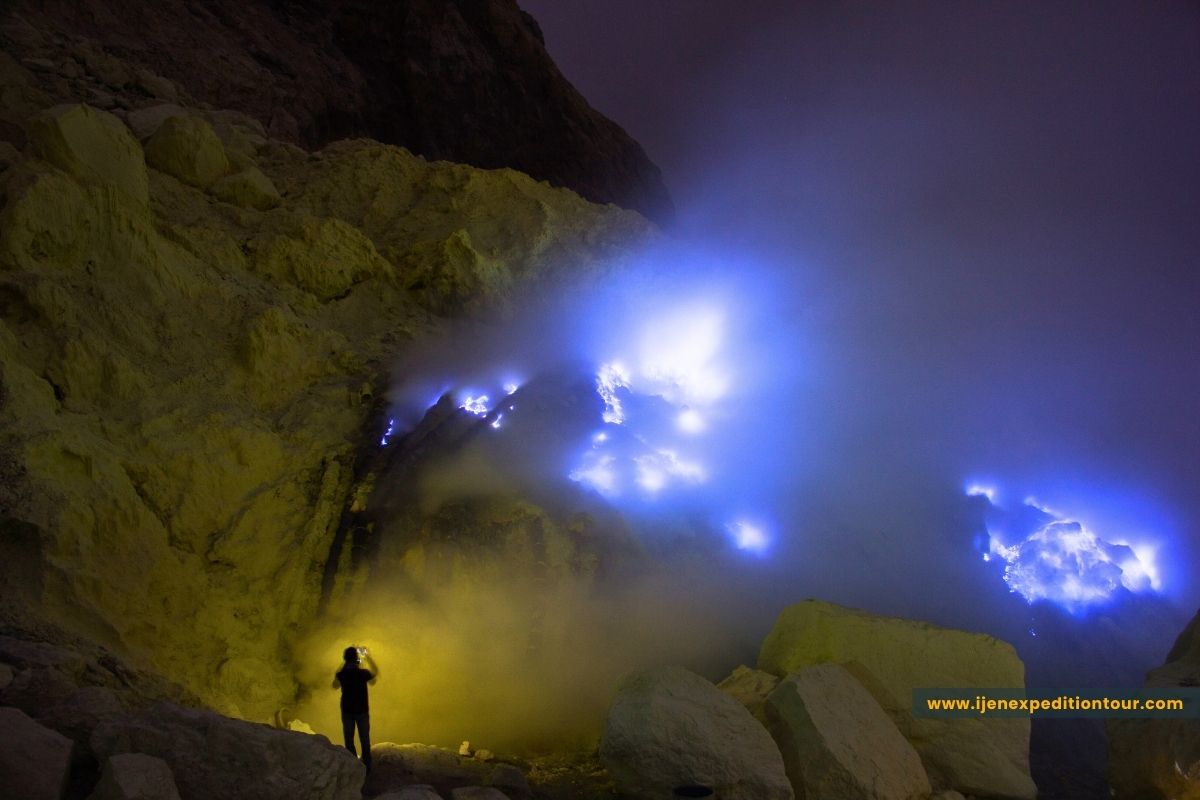
The blue flames are created by burning sulfuric gas emerging from the volcano.
The Ijen Blue Fire is a rare volcanic phenomenon where sulfuric gases ignite and burn with bright blue flames. Unlike molten lava, these flames are created by burning sulfur gas that escapes from cracks in the volcano.
This natural event is extremely uncommon. In fact, only a few places in the world are known to produce visible blue flames from volcanic gases, making Ijen Crater Blue Fire one of the most unique geological attractions globally.
At Mount Ijen, the flames can reach temperatures exceeding 600°C (1,112°F). When sulfur gas emerges from underground vents and meets oxygen, it combusts and produces glowing blue flames that appear almost surreal in the darkness of night.
Because of this extraordinary volcanic activity, Mount Ijen Blue Fire has become one of the most sought-after natural wonders in Southeast Asia.
Why Does the Blue Fire Happen
Sulfuric Gas From the Volcano
Mount Ijen is an active stratovolcano located in East Java. Beneath the crater lies a large reservoir of molten rock that releases sulfur-rich gases through cracks and vents in the volcanic surface.
These gases contain high concentrations of sulfur dioxide and hydrogen sulfide, which escape under pressure from the volcano.
Gas Ignition at High Temperature
When the sulfur gas emerges from the vents, it can reach temperatures of over 600°C. At such high temperatures, the gas can ignite instantly upon contact with oxygen.
Once ignited, the gas burns continuously as it escapes from the ground, creating the Blue Flame Ijen Volcano phenomenon.
Why the Flame Appears Blue
Sulfur burns with a bright blue color, which is why the flames appear electric blue instead of orange or red like typical fire.
In some cases, the burning sulfur flows downhill like liquid blue fire, producing an otherworldly scene that has made Ijen Volcano Blue Fire famous worldwide.
Where the Blue Fire Is Located at Kawah Ijen
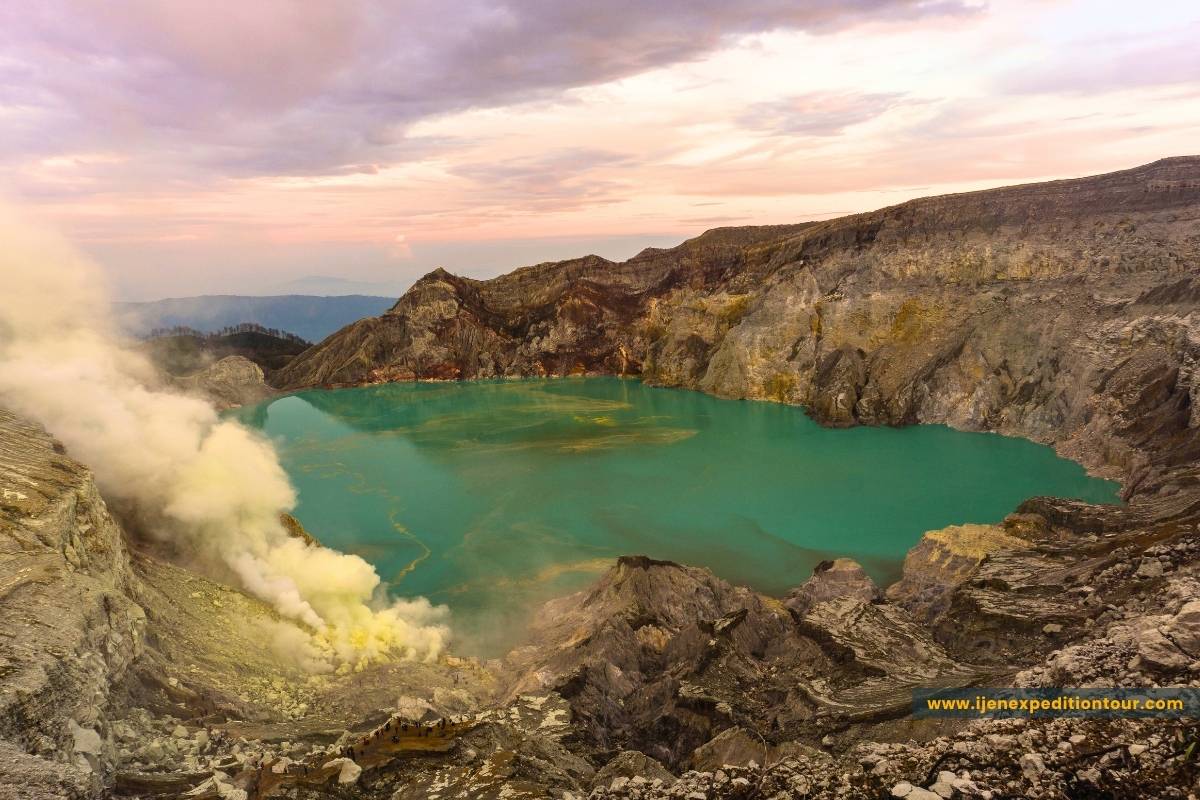
Kawah Ijen hosts one of the world’s largest acidic crater lakes.
The Indonesian Blue Fire Ijen phenomenon occurs inside the massive Kawah Ijen crater, which contains the world’s largest acidic crater lake.
The blue flames are typically found in three main locations:
Crater Lake Area
Near the edge of the turquoise crater lake, sulfur gases escape through volcanic fissures.
Sulfur Vents
Most of the visible blue flames originate from sulfur vents along the crater walls, where gas pressure is strongest.
Sulfur Mining Area
The flames are also visible near the traditional Ijen crater sulfur mining site, where miners collect solid sulfur blocks daily.
This combination of volcanic gases, sulfur deposits, and geothermal heat creates the ideal environment for the blue flame phenomenon.
How to See the Ijen Blue Fire
For travelers wondering how to see the blue fire in Ijen crater, the experience requires a nighttime hike.
Midnight Trekking to the Crater
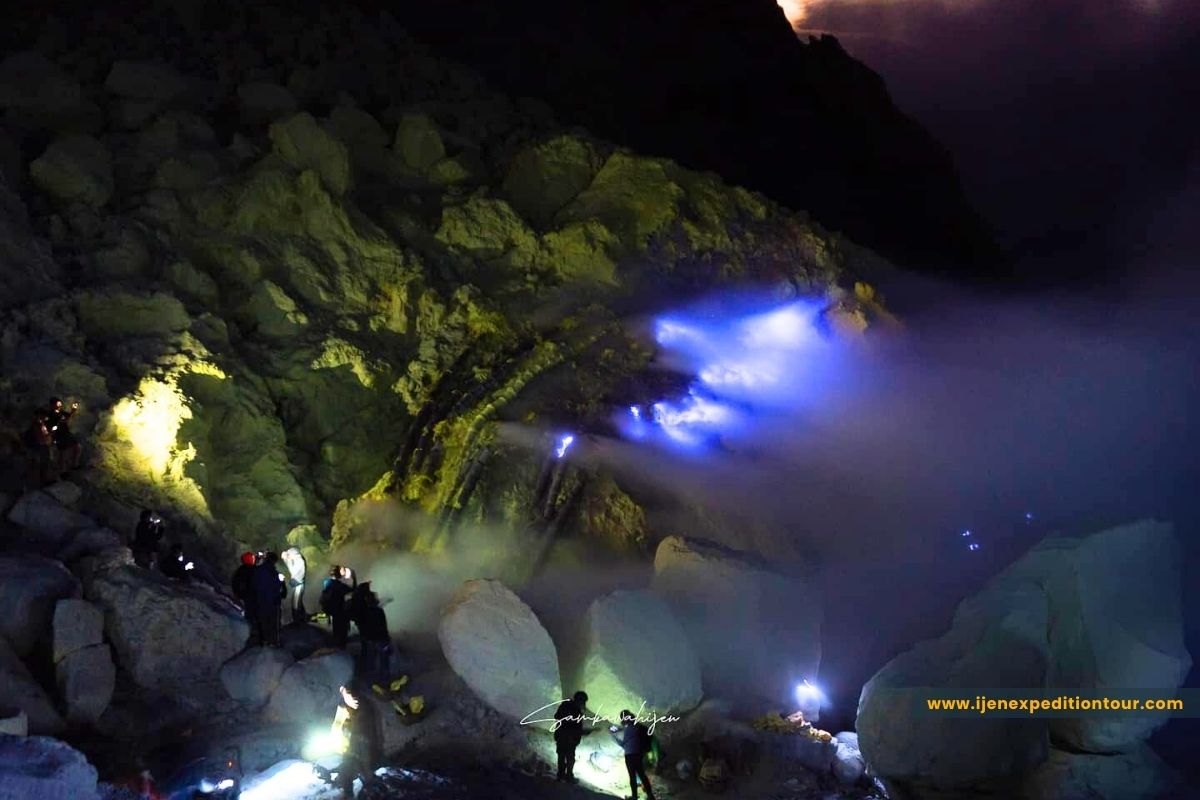
Visitors usually start the Ijen night trek around midnight.
Most visitors begin their trek around 12:30 AM to 1:00 AM from the Paltuding base camp.
The goal is to reach the crater rim before descending into the volcano while the sky is still dark.
For those starting nearby, a popular option is the Ijen midnight tour from Banyuwangi which allows visitors to begin the hike at the perfect hour to witness the flames.
Descending to the Crater Floor
After reaching the rim, travelers descend roughly 300 meters down steep volcanic terrain to reach the sulfur vents where the blue flames burn.
This section requires caution because the path can be rocky and sulfur gases may be strong.
Watching the Blue Flames
Once inside the crater, visitors can observe the Ijen blue flames dancing along sulfur pipes and volcanic fissures.
The sight of glowing blue fire against the dark volcanic landscape is truly unforgettable.
Best Time to See the Blue Fire
Best Hour of the Night
The best time to see the blue fire in Ijen crater is between 2:00 AM and 4:00 AM.
During these hours, the darkness allows the flames to appear bright and intense.
Why the Flames Disappear After Sunrise
As daylight approaches, the blue flames become difficult to see because sunlight overwhelms their glow.
The flames are still burning, but they become almost invisible once the sun rises.
Best Months to Visit Ijen
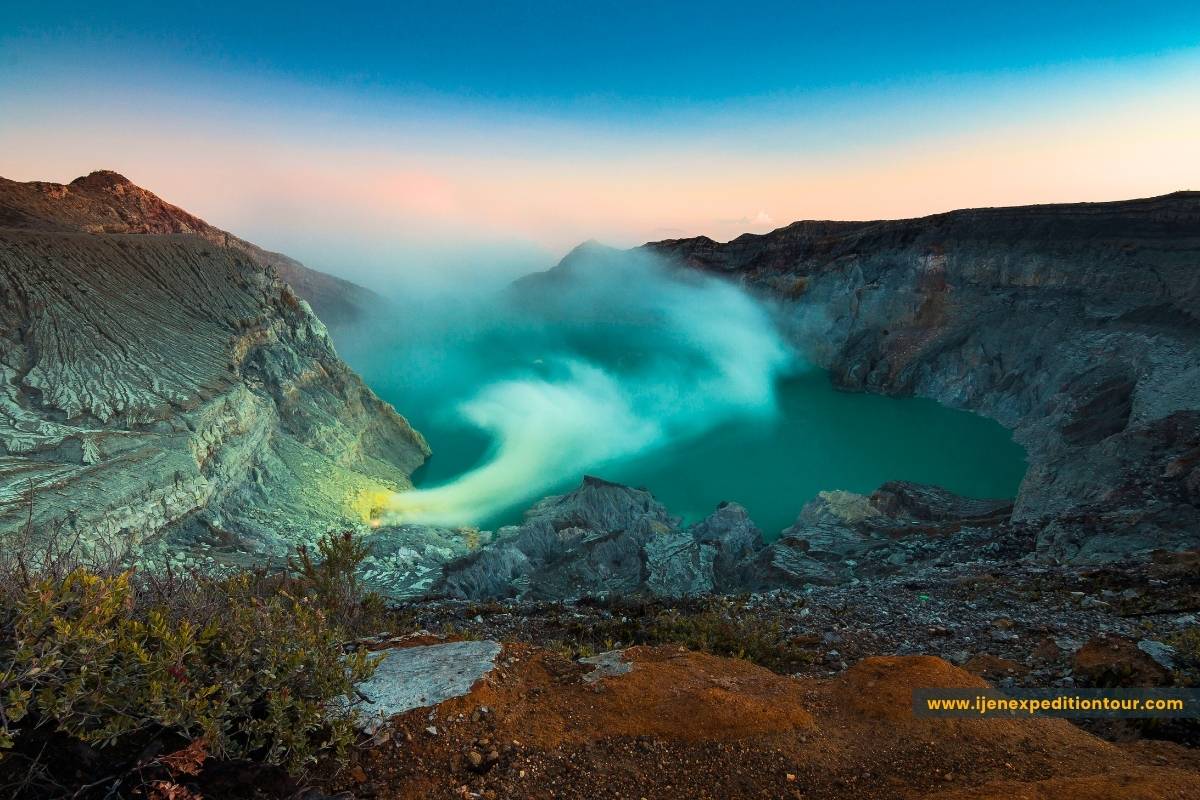
Although the blue flames can appear year-round, the best conditions occur during the dry season from April to October.
During this time:
Trails are safer
Visibility is clearer
Weather conditions are more stable
Important Disclaimer About the Ijen Blue Fire
While the Ijen Blue Fire is one of the most fascinating volcanic phenomena in the world, visitors should understand that the blue flames are a natural event and cannot be guaranteed every night.
The visibility of the Ijen crater blue fire phenomenon depends on several natural conditions, including:
volcanic gas pressure
wind direction inside the crater
sulfur gas activity
weather and visibility conditions
On some nights the flames appear very strong and bright, while on others they may appear smaller or partially hidden by volcanic gas clouds.
Even when the flames are less visible, the night trek into Kawah Ijen, the dramatic volcanic landscape, and the sunrise over the turquoise crater lake still make the journey one of the most remarkable experiences in Indonesia.
For the best chances of seeing the Mount Ijen blue fire, visitors are recommended to join a guided midnight trekking tour with experienced local guides who monitor volcanic conditions.
Ijen Blue Fire Hiking Route
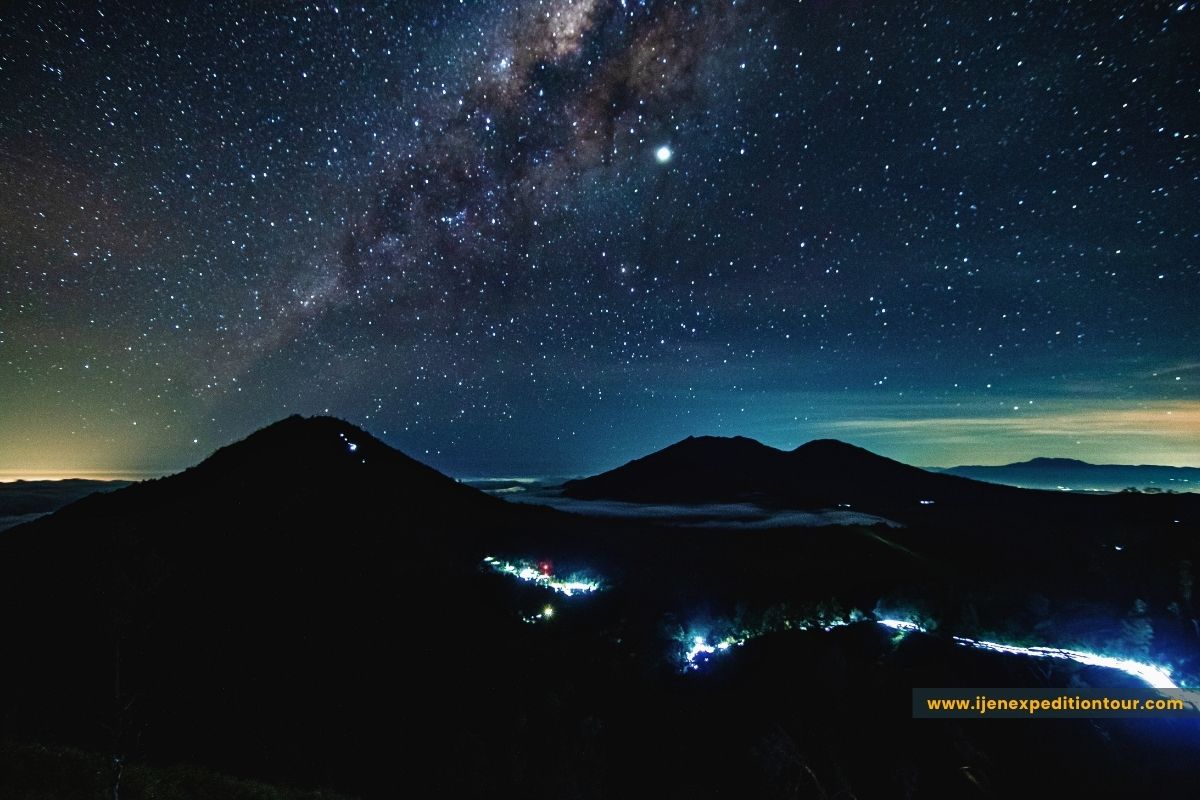
The trail from Paltuding basecamp leads hikers to the crater rim.
The hike to the volcano is relatively straightforward but still requires preparation.
For a detailed breakdown of the trail, distance, and hiking conditions, see the Ijen Crater hike guide.
Trail Distance
The main hiking trail from Paltuding base camp to the crater rim is approximately:
3 kilometers (1.8 miles) one way.
Hiking Duration
Most travelers take:
1.5 to 2 hours to reach the crater rim
30 minutes to descend into the crater
Overall, the journey to the blue flames usually takes around 2 to 2.5 hours.
Difficulty Level
The trek is considered moderate difficulty because:
The trail climbs steadily uphill
The altitude reaches 2,386 meters
The descent into the crater is steep
However, most travelers with basic fitness can complete the hike comfortably.
Is It Safe to See the Blue Fire
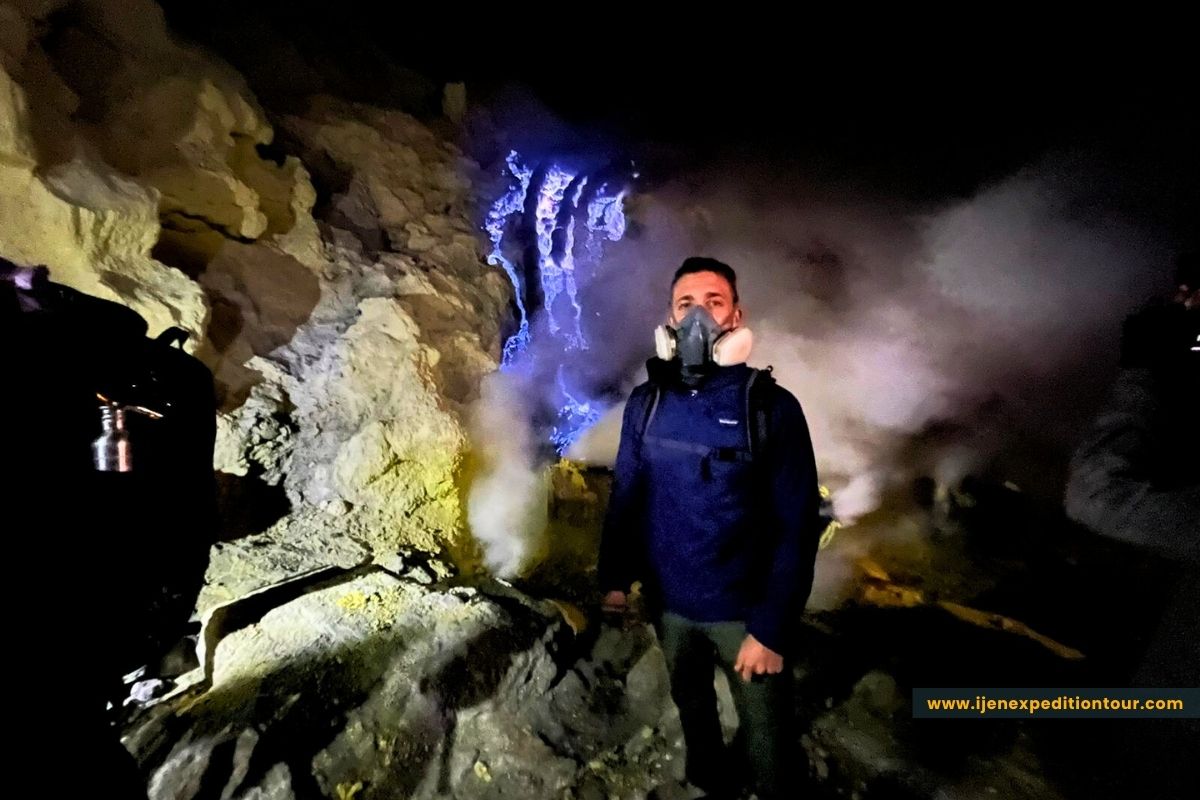
Gas masks help protect visitors from sulfur gases inside the crater.
Visiting the Blue Fire Ijen Crater is generally safe when done with proper preparation.
Sulfur Gas Risks
Sulfur gas concentrations can sometimes increase near the vents.
Exposure may cause:
breathing irritation
coughing
eye discomfort
Importance of Gas Masks
For safety, visitors are advised to wear protective gas masks when descending into the crater.
Many guided tours provide professional masks designed for volcanic gas protection.
Safety Guidelines for Visitors
Important safety tips include:
follow your guide’s instructions
wear sturdy hiking shoes
bring warm clothing
carry a headlamp
avoid standing directly in gas vents
With proper preparation, the night hike to Ijen Blue Fire is a safe and unforgettable adventure.
The Sulfur Miners of Kawah Ijen
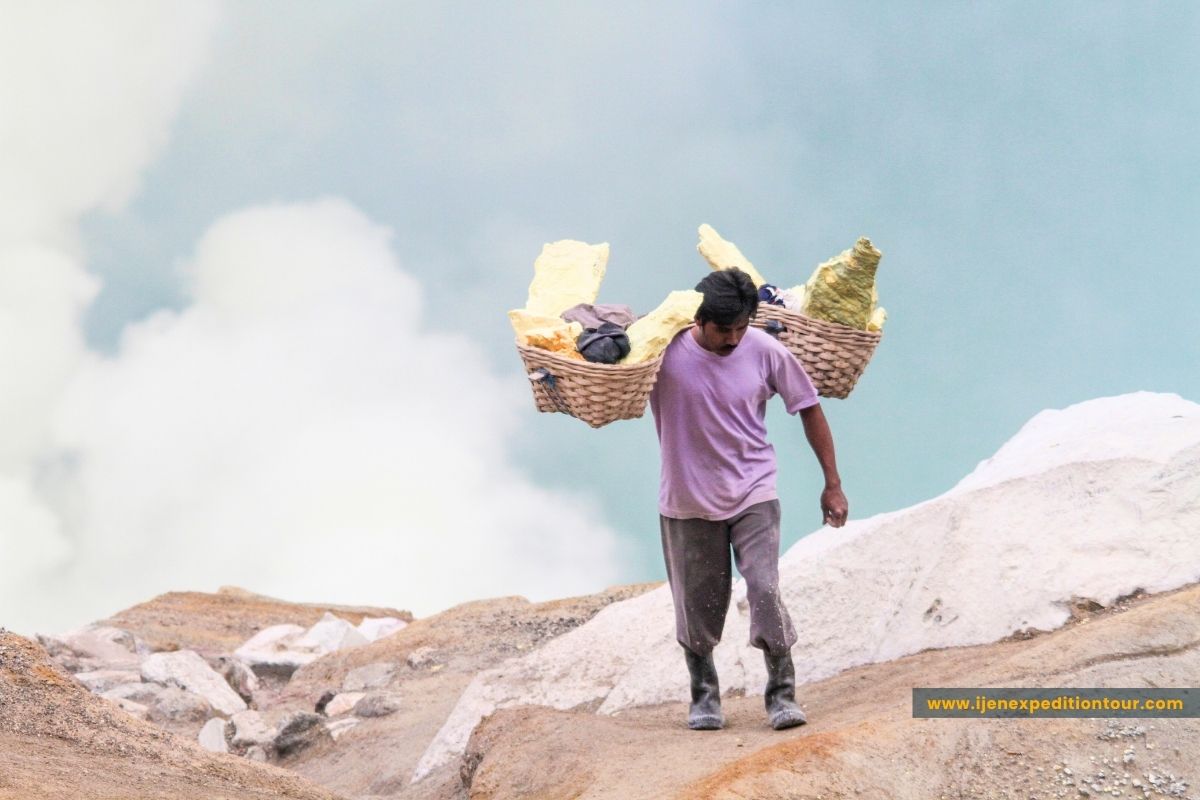
Sulfur miners work daily inside the crater collecting sulfur blocks.
One of the most remarkable aspects of visiting Ijen is witnessing the work of the sulfur miners.
Every day, miners descend into the crater to collect sulfur deposits formed by the volcanic gases.
They manually break sulfur blocks and carry baskets weighing 60–90 kilograms up the steep trail.
The miners walk several kilometers each day to transport the sulfur to the base station.
Although the work is extremely demanding, it has become an iconic part of the Banyuwangi volcano tourism experience and offers visitors insight into the human side of this volcanic landscape.
Photography Tips for Ijen Blue Fire
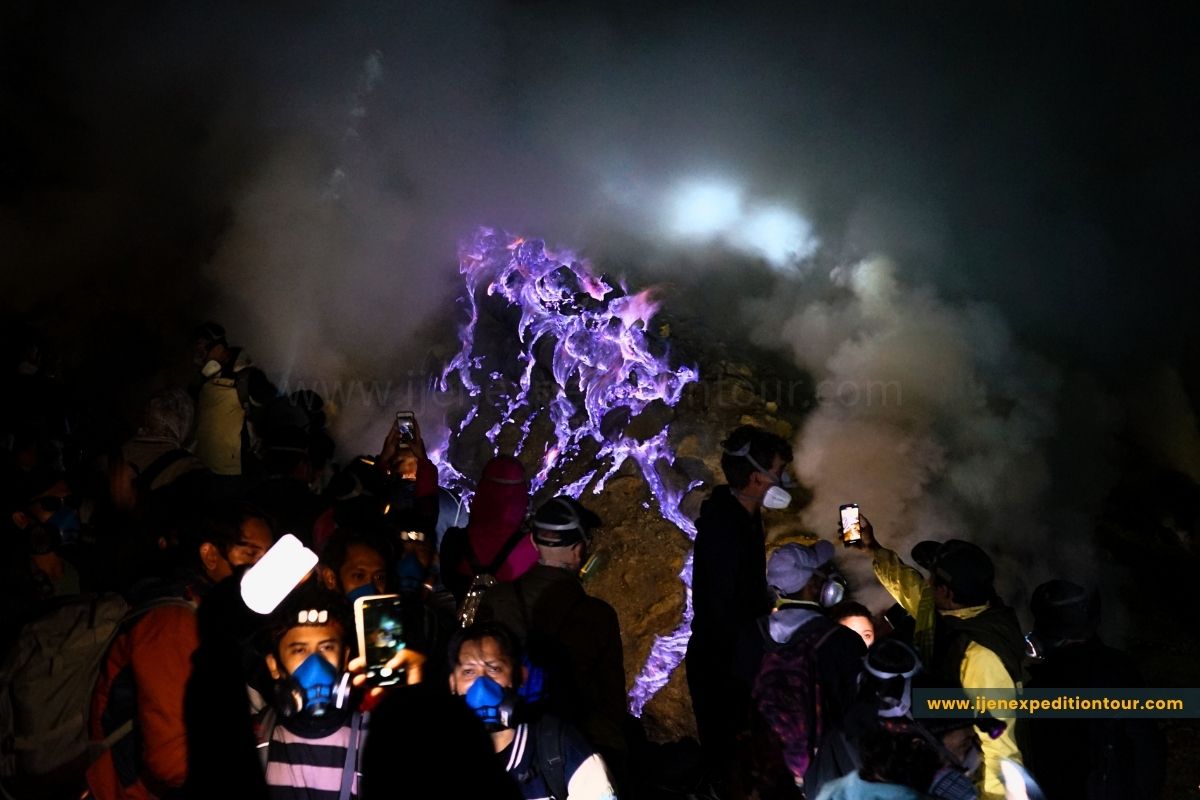
The glowing blue flames create a surreal volcanic landscape.
Capturing the electric blue flames of Ijen requires careful camera settings due to the dark environment.
Camera Settings for Blue Fire
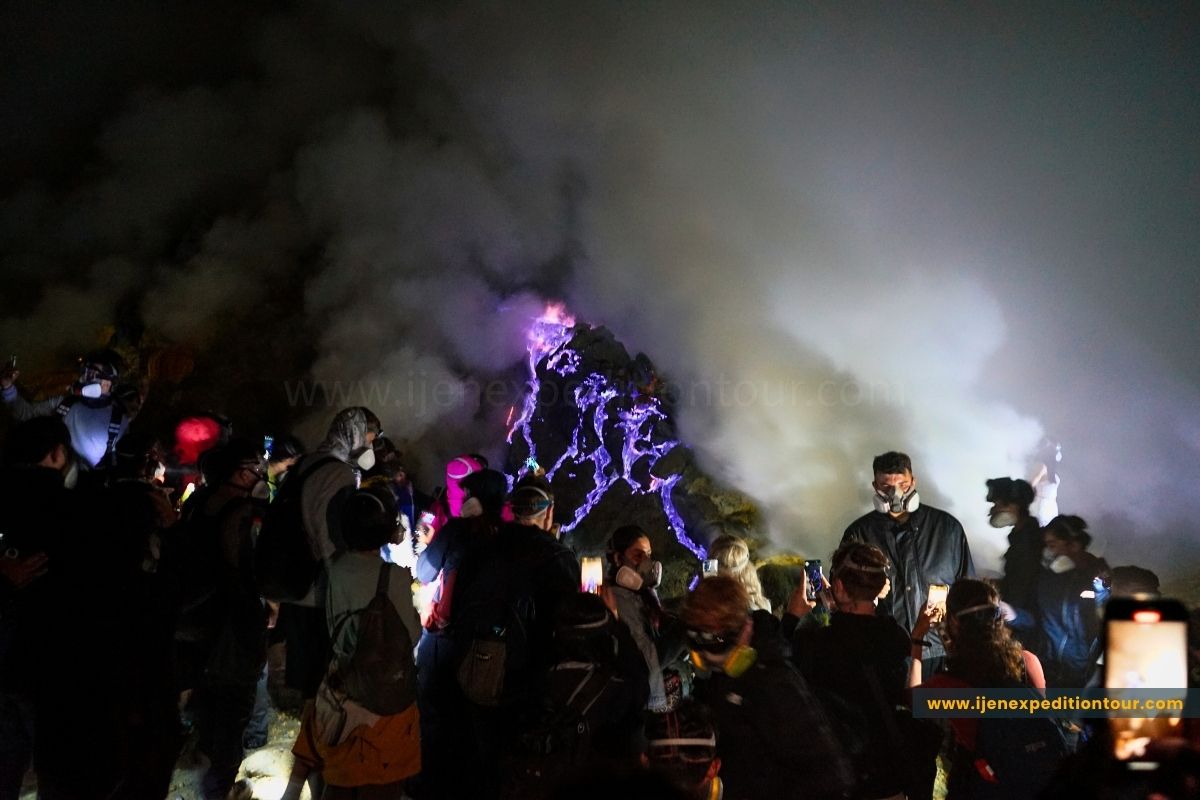
Tripods help photographers capture the blue flames in low light.
Recommended settings include:
ISO: 800–3200
Aperture: f/2.8 – f/4
Shutter speed: 5–15 seconds
These settings help capture the glowing flames in low-light conditions.
Best Lens for Night Photography
A wide-angle lens (14mm–24mm) is ideal for capturing the entire volcanic landscape.
This allows photographers to include the crater, flames, and night sky in a single frame.
Using Tripods in the Crater
A tripod is highly recommended for long exposures.
However, photographers should be cautious when setting up equipment due to uneven terrain and sulfur fumes.
Ijen Blue Fire Tour Options
Because the hike occurs at night and involves volcanic terrain, many travelers prefer joining guided tours.
Ijen Midnight Tour from Banyuwangi
Travelers staying near the volcano often choose the Ijen midnight tour from Banyuwangi for the most direct access to the crater.
Ijen Blue Fire Tour from Bali
Visitors coming from Bali can join the Ijen Blue Fire tour from Bali which includes transportation and a guided midnight trek to the volcano.
Guided Ijen Crater Tours
Several longer tour options combine Mount Ijen with other famous volcanoes in East Java:
Experience a full volcano adventure with the Ijen crater tour from Surabaya
Enjoy a relaxing overnight trip through the Ijen crater tour 2 days 1 night from Banyuwangi
Discover Java’s volcanic landscapes on the Ijen crater tour from Bali 2 days 1 night
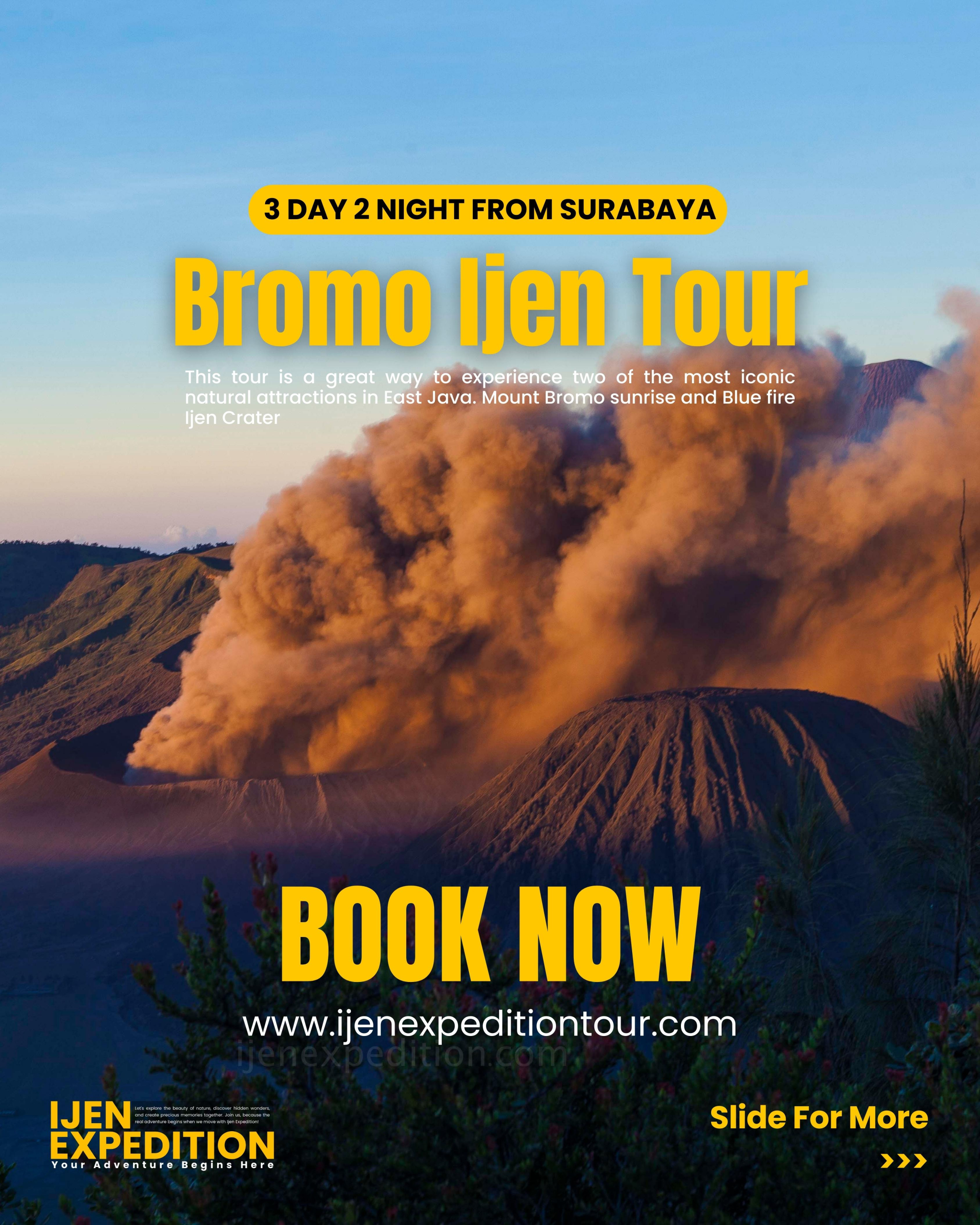
Combine two iconic volcanoes with the Bromo Ijen tour from Surabaya
Explore East Java’s top highlights with the Bromo Ijen tour 3 days from Bali
Take a complete volcano expedition through the Bromo Tumpak Sewu Ijen crater tour 4D3N
For travelers coming directly from Bali, another popular option is the Ijen crater tour from Bali 1 day which allows visitors to experience the volcano in a single day trip.
Ijen Blue Fire FAQ
Is the Ijen blue fire real?
Yes. The Ijen crater blue fire phenomenon is a scientifically documented volcanic event caused by burning sulfur gas.
Can you see the blue fire every night?
Most nights the flames are visible, but weather conditions and gas pressure may affect visibility.
Do you need a guide to see the blue fire?
While it is possible to hike independently, most travelers prefer guided tours due to safety considerations and night navigation.
Is the hike dangerous?
The hike is considered moderate difficulty, but the descent into the crater requires caution due to sulfur gas and steep terrain.
Can tourists go down to the crater?
Yes. Visitors can descend into the crater to observe the flames, but it is recommended to wear gas masks and follow safety guidelines.
Conclusion
The Ijen Blue Fire is one of the most extraordinary volcanic phenomena in the world. Located deep within Mount Ijen volcano in East Java, these glowing blue flames create a surreal landscape unlike any other place on Earth.
Witnessing the flames requires a midnight hike through volcanic terrain, but the reward is an unforgettable experience. From the glowing sulfur vents to the dramatic crater lake, every part of the journey offers a unique glimpse into the power of nature.
For travelers seeking one of Indonesia’s most remarkable natural wonders, visiting Kawah Ijen should be at the top of the list.
To experience the phenomenon safely and comfortably, consider booking a professional guided tour such as the Ijen Blue Fire tour from Bali or a combined Bromo Ijen volcano expedition, allowing you to explore the best volcanic landscapes in East Java.
Plan Your Ijen Blue Fire Adventure
Seeing the Ijen Blue Fire is truly a once-in-a-lifetime experience. From the dramatic midnight trek to the glowing blue flames inside the volcanic crater, Mount Ijen offers one of the most extraordinary natural spectacles in the world.
To make the journey safer and more comfortable, many travelers choose a guided tour with experienced local guides who understand the volcano’s terrain and conditions.
You can explore several tour options depending on your starting location:
Join a convenient Ijen Midnight Tour from Banyuwangi for the closest access to the volcano.
Travel easily with the Ijen Blue Fire Tour from Bali, including transport and guided trekking.
Combine multiple volcanoes with the popular Bromo Ijen Tour from Surabaya.
With the right planning and a professional guide, witnessing the blue flames of Mount Ijen can become one of the most unforgettable travel experiences in Indonesia.
To check tour availability, pricing, and booking information, please contact:
Ijen Expedition Tour
📞 WhatsApp: +6285748711646
✉️ Email: ijenexpeditiontourandtravel@gmail.com

Maybe you are interested in reading the following article:
Ijen crater tour from Bali 1 Day Tour | Privat Tour
Ijen crater tour from Bali 1 Day | Ijen crater tour Ijen Crater Tour from Bali is probably one of my favorite tourism destinations for first-time visitors in Indonesia. The landscape is out of this world. One of the highlights of visiting Ijen is the blue flames, which you can only see at night. The... read more
Bromo Ijen Tumpak Sewu from Bali 4D3N Back To Bali
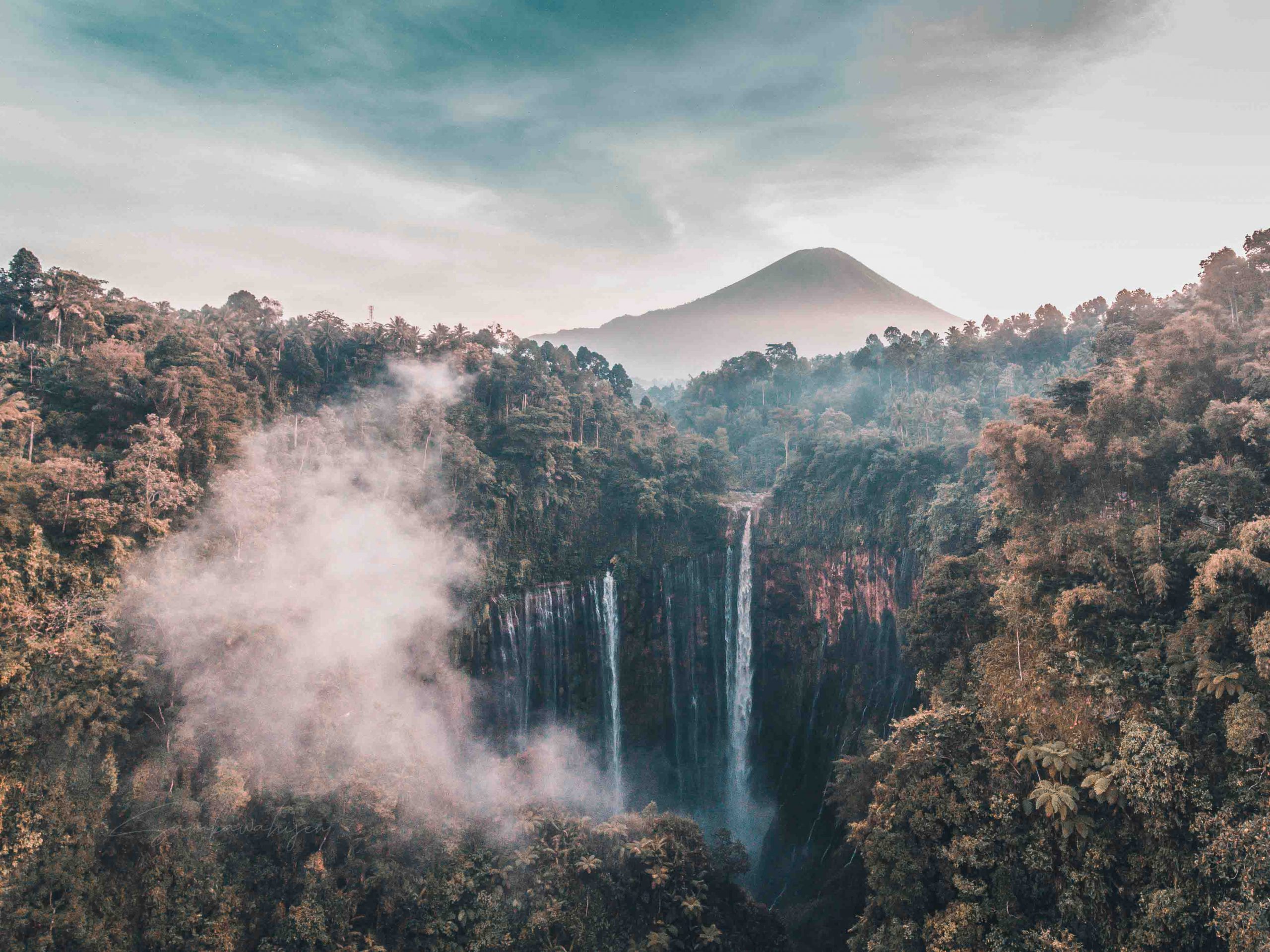
Bromo Ijen Tumpak Sewu 3 best tourist spots in East Java, namely visiting the sunrise on Mount Bromo, the Blue Fire of Ijen Crater in Banyuwangi, and Tumpak Sewu waterfall in Lumajang. The tour package program starts with a pick-up in Surabaya or Bali Here is the Itinerary of the Tour Packages for Mount Bromo... read more
Bromo Ijen Crater tour from malang Finish Ketapang Harbor
Bromo Ijen Blue fire Tour 3 day 2 Night Tour Package is one of the Mount Bromo tour package options that consists of three popular tourist objects in Java Island Indonesia. These tourism objects offer amazing landscapes from all sides. If you are interested to enjoy Ijen Crater trekking, Mount Bromo and Madakaripura Waterfall tour package has a duratio... read more

Mount Bromo Ijen Tour From Surabaya 3 Day 2 Night ( 2026 )
Mount Bromo Ijen Tour: The Mount Bromo and Ijen tour package is one of the most captivating travel experiences in East Java, showcasing the raw beauty of Indonesia’s volcanic landscapes. This adventure is perfect for anyone seeking a meaningful holiday, whether you’re travelling with family, friends, a group, or solo. The spectacular sunrise over Mou... read more
Mount Ijen Blue Fire Tour From Banyuwangi 1 Day Tour
Mount Ijen Blue Fire Tour From Banyuwangi 1-Day Tour Mount Ijen Blue Fire Tour From Banyuwangi 1 Day Trip – is one of the challenging adventure activities that can be an option to add a beautiful impression during holiday time. Climbing to the crater of Ijen is very different from climbing in other areas. Here,... read more

Bromo Ijen Tour package From Bali 3 Day 2 Night
Bromo Ijen Tour Package from Bali 3 Day 2 Night Bromo Ijen tour package is one of the best destinations in eastern Java that offers natural attractions centred on natural beauty. The beauty of tourism is that it can provide its value of happiness for holidays with family members, friends, groups, or individuals. Holidays to... read more
Bromo Midnight Tour From Surabaya | Privat Tour
Bromo Midnight Tour From Surabaya | Privat Tour read more
Bromo Ijen Blue Fire Tour 3 Days | 3D2N From Surabaya
Mount Bromo Ijen Blue Fire Tour Package 3 Days 2 Nights From Surabaya Mount Bromo Ijen Blue Fire Tour Package from Surabaya is a complete 3 Days 2 Nights East Java volcano expedition. This journey starts and finishes in Surabaya, combining the iconic Mount Bromo sunrise, the rare Ijen Blue Fire phenomenon, and scenic landscapes... read more

Bromo Tour from Probolinggo 1 Day | Bromo Midnight Tour
Bromo Tour from Probolinggo 1 Day | Bromo Midnight Tour Bromo Tour from Probolinggo in 1 Day is an excellent way to witness the stunning beauty of Mount Bromo, one of Indonesia’s most iconic tourist destinations. Located in East Java, Mount Bromo attracts tourists from all over the world who come to see the majestic... read more

Birding Paradise: A Birdwatcher’s Guide to Gunung Ijen
Birding Paradise: A Birdwatcher’s Guide to Gunung Ijen Gunung Ijen, a majestic volcano in Java, Indonesia, is more than just a fiery crater and breathtaking blue flames. This volcanic wonder is a hidden gem for bird enthusiasts, boasting various avian residents across its ecological zones. A Haven for Endemic and Highland Birds The slopes of... read more
Best Time to Visit Ijen Crater: Weather, Blue Fire Guide
Best Time to Visit Ijen Crater: Complete Travel Guide for Weather, Blue Fire, and Sunrise The best time to visit Ijen Crater is a common question among travelers planning to explore one of Indonesia’s most extraordinary volcanic landscapes. Located in East Java near Banyuwangi, Kawah Ijen is famous for its electric blue flames, turquoise acidic... read more


Brom Ijen 3 Day
Kawah ijen tour from Bali

Contact Us
If you have any questions, please contact us.
Hotline
+6285748711646Whatsapp
085748711646Email
admin@ijenexpedition.com


4 comment